How Much Does Cyber Insurance Cost for Small Businesses?

How Much Does Cyber Insurance Cost for Small Businesses?

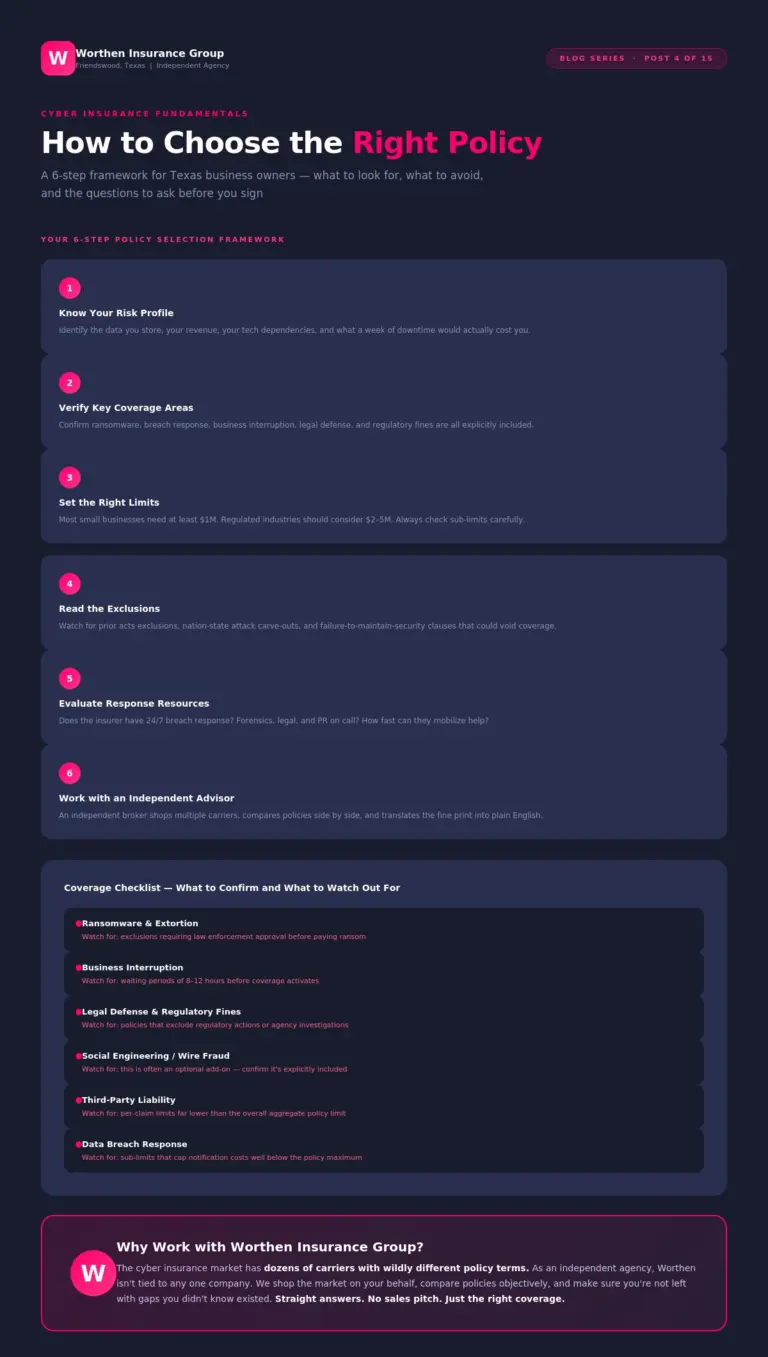
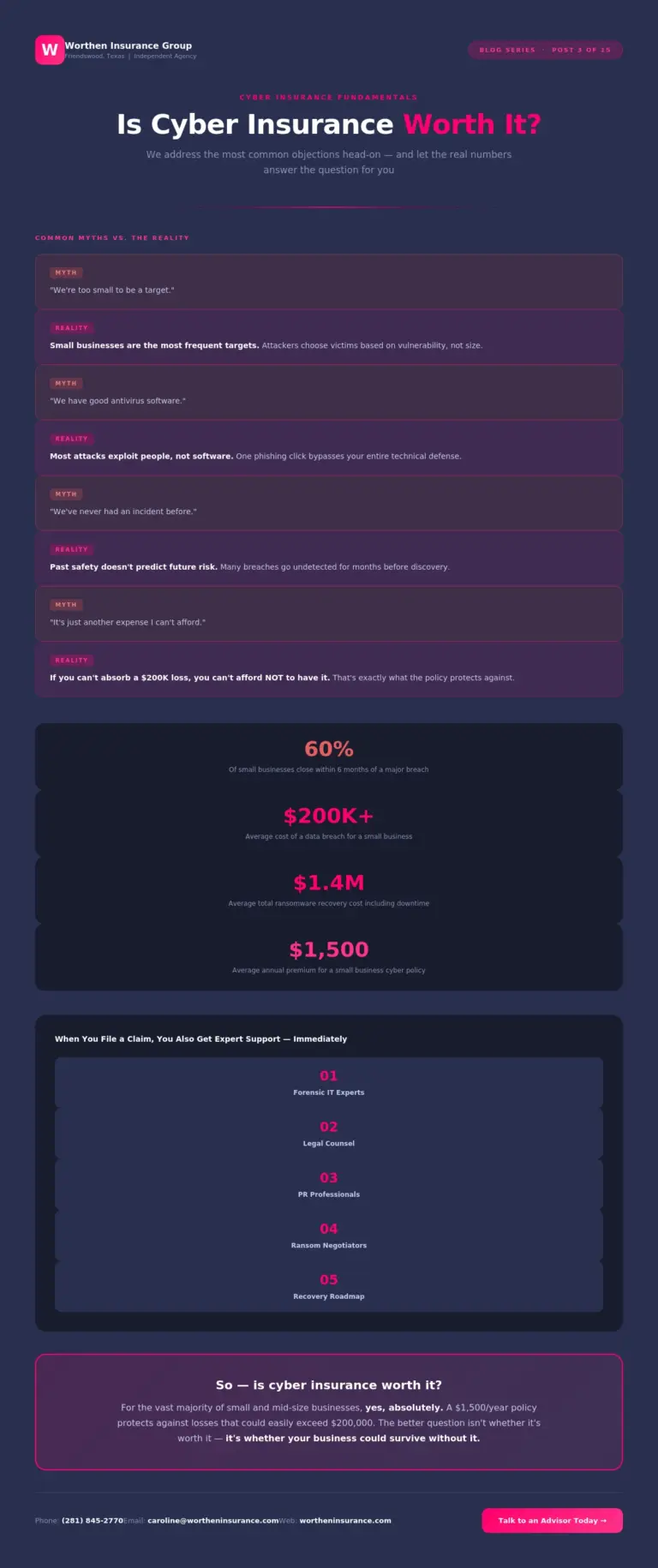
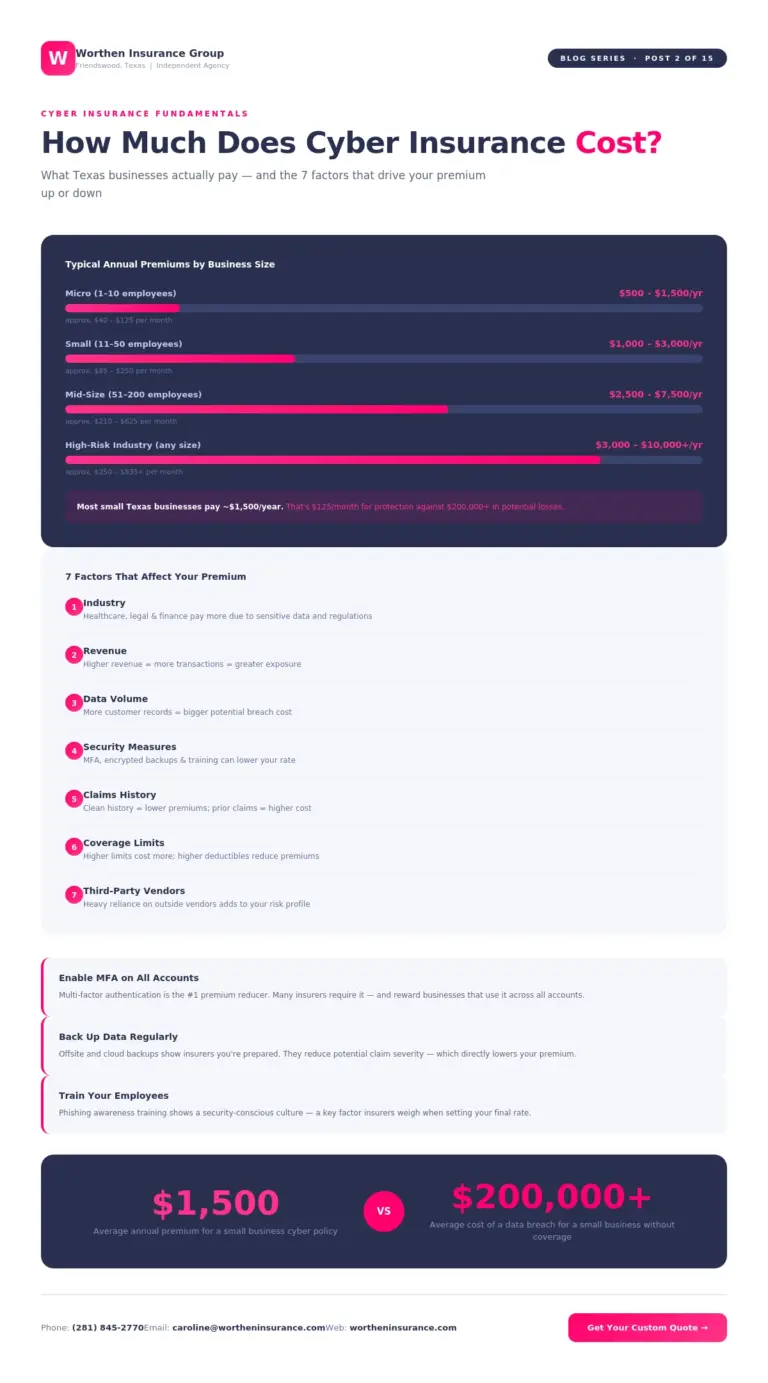
If you’ve been putting off cyber insurance because you assume it’s expensive, the numbers usually say otherwise. Most small and mid-size businesses land somewhere between $500 and $5,000 per year, with a typical premium around $1,500 annually (about $125 a month). From there, your price moves up or down based on a handful of underwriting factors, like your industry, revenue, how much customer data you store, your security controls (MFA and backups matter a lot), and the limits and deductible you choose. This post walks through the 7 biggest drivers of cost and the simplest steps you can take to reduce your premium before you apply.

What Does Cyber Insurance Cover?

What Does Cyber Insurance Cover

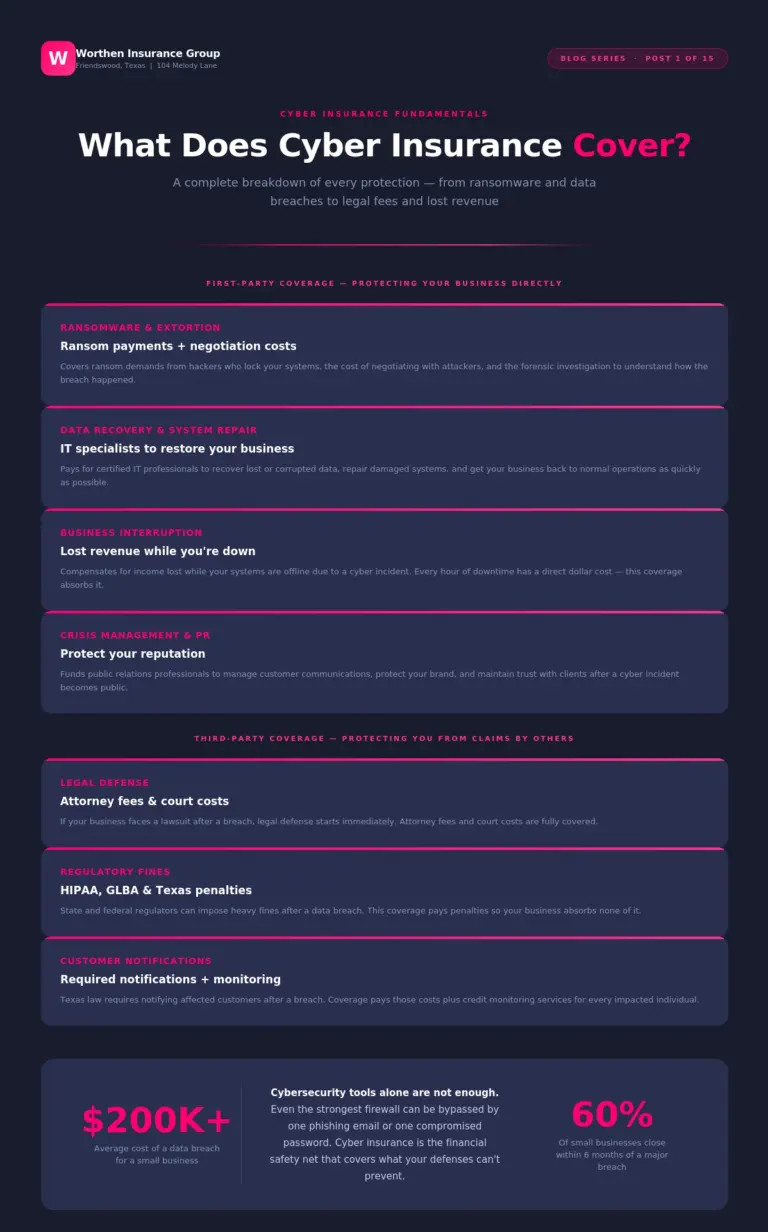
Cyber insurance usually breaks into two buckets: first-party coverage for when your business gets hit, and third-party coverage for when others make claims against you. This post breaks down what’s typically covered, from ransomware and forensics to data recovery and business interruption losses. It also explains third-party basics like legal defense, regulatory fines, and customer notification costs, plus common exclusions you should know before you buy.

What Is Cyber Insurance? A Simple Guide for Small Businesses

Small businesses are now the top targets for cybercriminals, and one bad click can shut down your entire operation. Cyber insurance helps protect your business from the financial and operational fallout of ransomware, data breaches, and costly downtime. If your company uses technology in any way, this coverage is no longer optional—it’s essential for staying resilient when a cyberattack hits.

What is Business Income Coverage?

Business income coverage (often called business interruption coverage) helps protect your company’s cash flow after a covered property loss forces you to slow down or shut down. If a fire, storm, or other covered claim damages your building or equipment, this coverage can help replace lost income and pay certain ongoing expenses while you repair and reopen. It’s designed to keep bills like payroll, rent, and loan payments from piling up when your revenue temporarily drops.

Call Email Quote Service