How Much Does Cyber Insurance Cost for Small Businesses?

How Much Does Cyber Insurance Cost for Small Businesses?

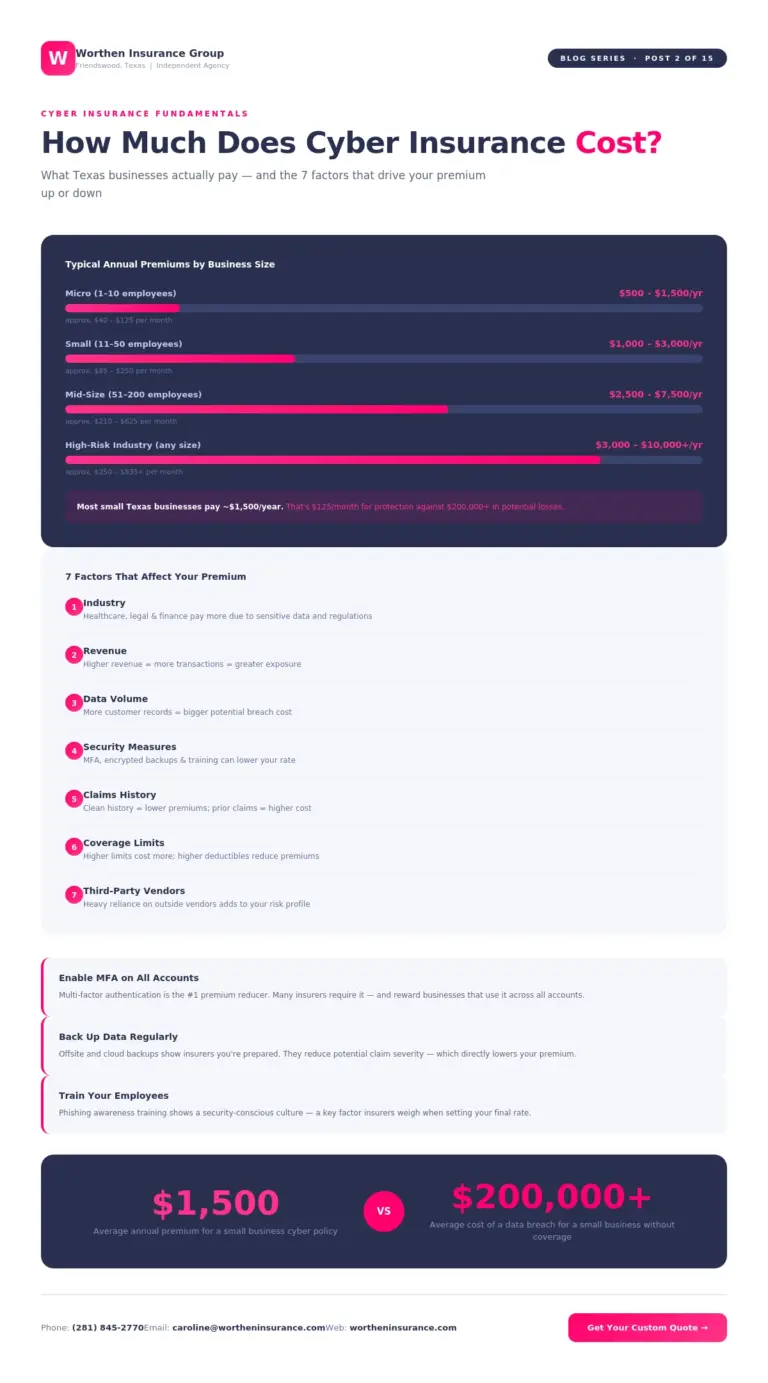
If you’ve been putting off cyber insurance because you assume it’s expensive, the numbers usually say otherwise. Most small and mid-size businesses land somewhere between $500 and $5,000 per year, with a typical premium around $1,500 annually (about $125 a month). From there, your price moves up or down based on a handful of underwriting factors, like your industry, revenue, how much customer data you store, your security controls (MFA and backups matter a lot), and the limits and deductible you choose. This post walks through the 7 biggest drivers of cost and the simplest steps you can take to reduce your premium before you apply.

WHY DOES THE DWELLING VALUE COVERAGE ON MY HOME GO UP?

If your homeowners (or windstorm) policy’s dwelling amount rises every year, it’s usually because insurers are trying to keep your coverage in line with what it would actually cost to rebuild your home today. Sale price and tax value aren’t the driver here. This post breaks down replacement cost vs. actual cash value, and why the 80% coinsurance requirement matters.

What is Business Income Coverage?

Business income coverage (often called business interruption coverage) helps protect your company’s cash flow after a covered property loss forces you to slow down or shut down. If a fire, storm, or other covered claim damages your building or equipment, this coverage can help replace lost income and pay certain ongoing expenses while you repair and reopen. It’s designed to keep bills like payroll, rent, and loan payments from piling up when your revenue temporarily drops.

Direct Carrier, Captive Agent or Independent Insurance Broker: Which Is Right For You?

There are three common ways to buy insurance: going direct through an online carrier or call center, working with a captive agent who represents one company, or partnering with an independent broker who can shop multiple carriers. In this guide, we break down the pros and cons of each so you can choose the option that fits your needs, budget, and comfort level.

Windstorm Insurance Options

If you live in coastal Texas, your homeowners policy may not include wind and hail coverage, which is why many property owners turn to a separate windstorm policy. This article explains when TWIA may be the right fit, why windstorm inspections matter for certain builds or renovations, and how wind and flood coverage work together (and don’t overlap).

Call Email Quote Service