How Much Does Cyber Insurance Cost for Small Businesses?

How Much Does Cyber Insurance Cost for Small Businesses?

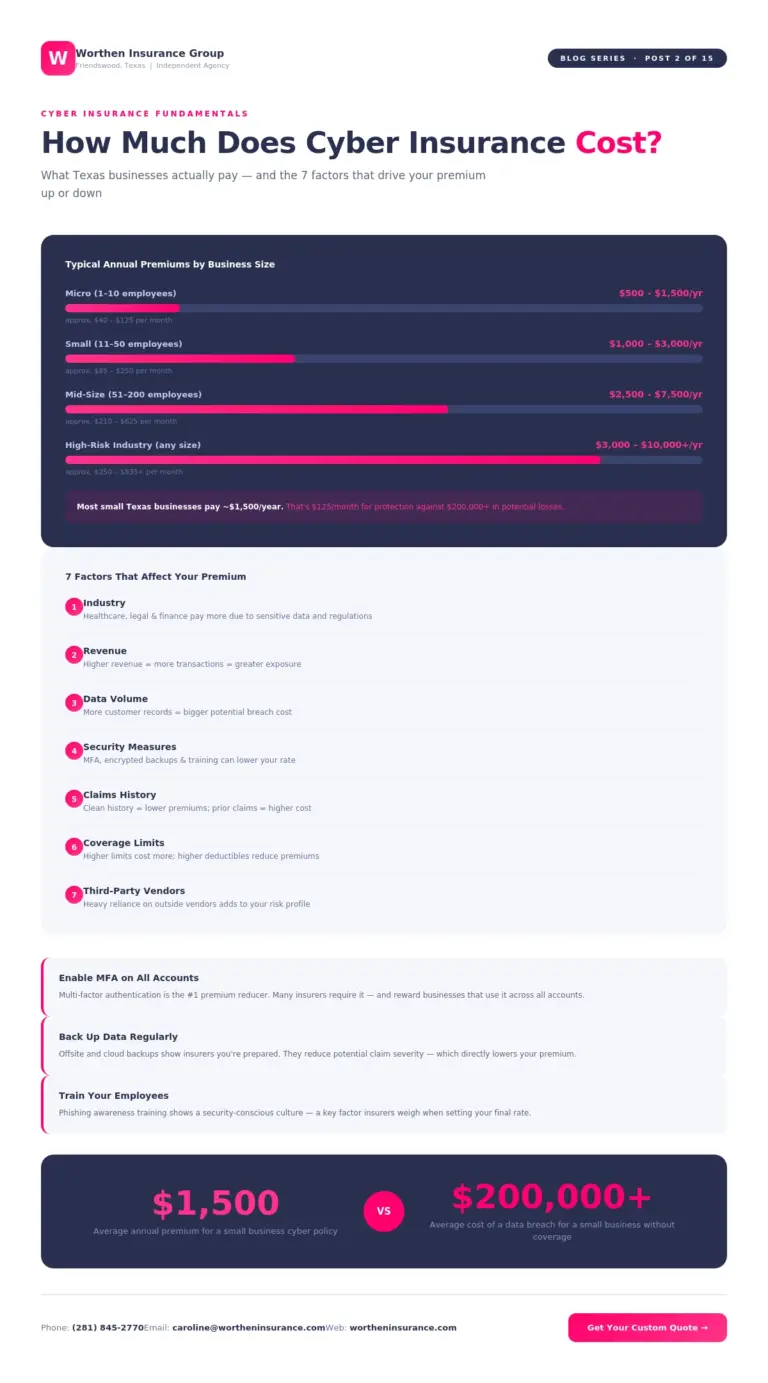
If you’ve been putting off cyber insurance because you assume it’s expensive, the numbers usually say otherwise. Most small and mid-size businesses land somewhere between $500 and $5,000 per year, with a typical premium around $1,500 annually (about $125 a month). From there, your price moves up or down based on a handful of underwriting factors, like your industry, revenue, how much customer data you store, your security controls (MFA and backups matter a lot), and the limits and deductible you choose. This post walks through the 7 biggest drivers of cost and the simplest steps you can take to reduce your premium before you apply.

What Does Cyber Insurance Cover?

What Does Cyber Insurance Cover

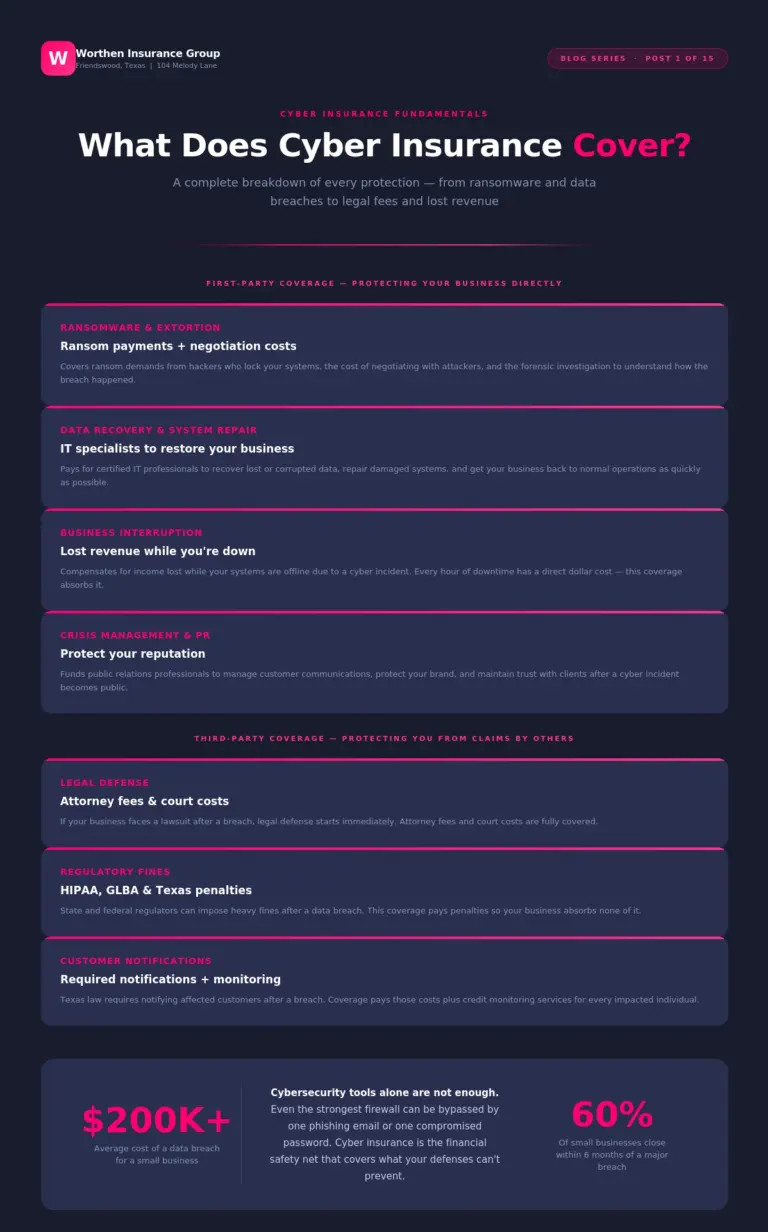
Cyber insurance usually breaks into two buckets: first-party coverage for when your business gets hit, and third-party coverage for when others make claims against you. This post breaks down what’s typically covered, from ransomware and forensics to data recovery and business interruption losses. It also explains third-party basics like legal defense, regulatory fines, and customer notification costs, plus common exclusions you should know before you buy.

What Is Cyber Insurance? A Simple Guide for Small Businesses

Small businesses are now the top targets for cybercriminals, and one bad click can shut down your entire operation. Cyber insurance helps protect your business from the financial and operational fallout of ransomware, data breaches, and costly downtime. If your company uses technology in any way, this coverage is no longer optional—it’s essential for staying resilient when a cyberattack hits.

Prioritizing Coverage Over Price When Insurance Shopping

neighborhood homes

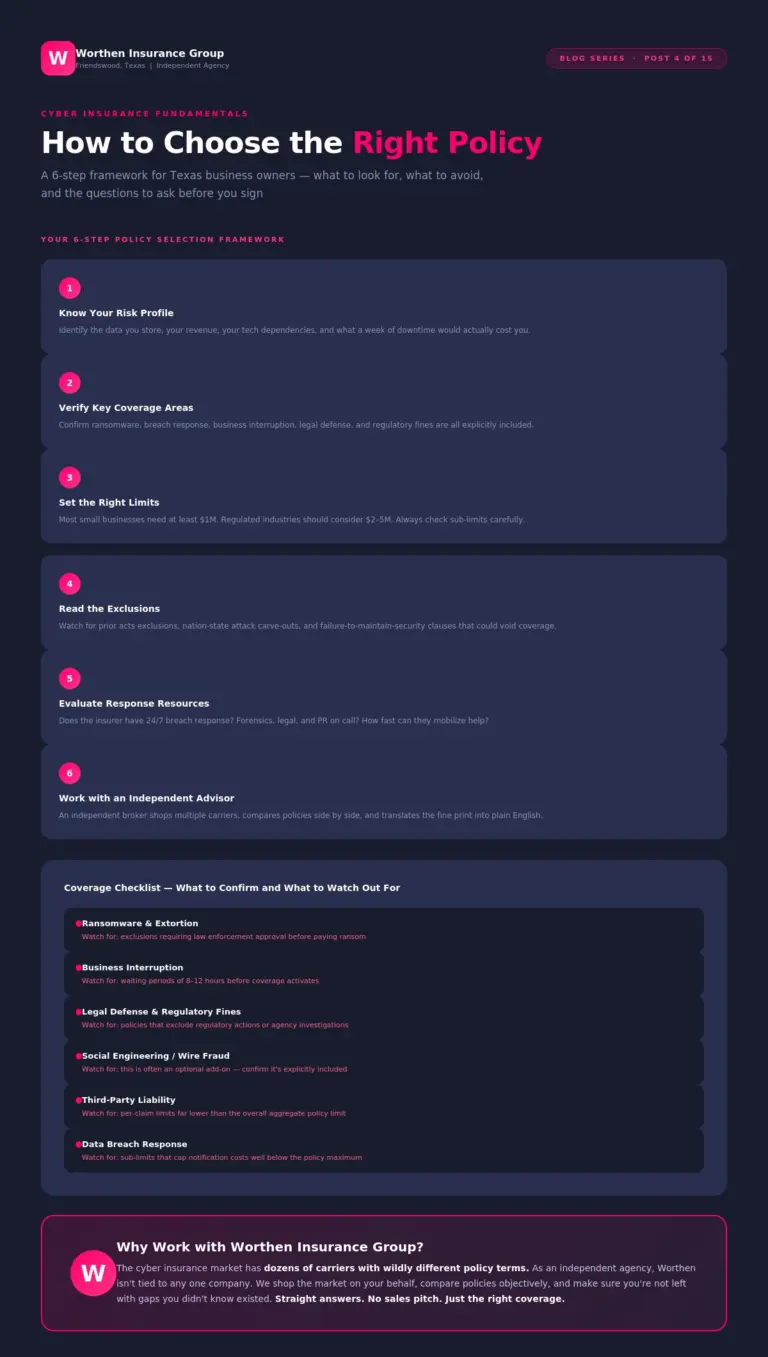
It’s tempting to choose the cheapest policy, especially when insurance is marketed like a commodity. But the real value of insurance shows up when you have a claim and need the coverage to actually perform. This post explains what “adequate coverage” really means, the risks of being underinsured, and how to balance premium, deductibles, and protection.

Navigating Insurance Rate Increases: A Comprehensive Guide

smiling creative team

Insurance rate increases are frustrating, but they’re also common and usually driven by bigger market forces like inflation and claims trends. This guide walks through why rates go up, the first steps to take (including reviewing your coverage and discounts), and practical options like shopping carriers or adjusting deductibles with your broker’s help.

The Essential Role of Independent Insurance Agents

photo of team members

Introduction In the ever-evolving world of insurance, the role of an independent insurance agent has become increasingly crucial. Unlike captive agents, independent agents offer a unique value proposition to their clients, providing a wide array of insurance options from various…

Call Email Quote Service